


Make your chessboard a special gift
Add a personal engraving or gift wrapping with one click. You can remove these extras anytime in the cart.


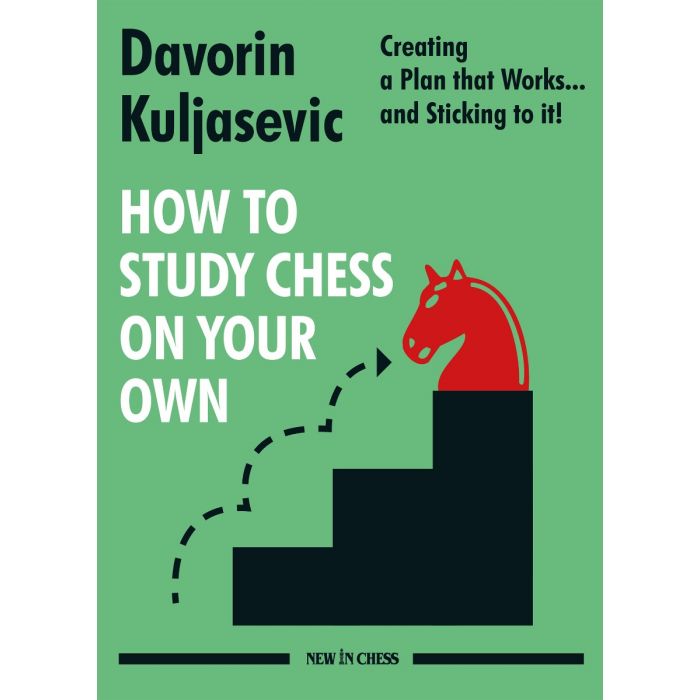

How to Study Chess on Your Own

Add a gift box, an engraving — or both — to make it truly special.

Buy It With
€9,00
€10,00

Buy It With
€18,00
This How to Study Chess on Your Own is an English-language chess book for players who want to improve through independent, structured study. Instead of another puzzle collection, it offers a practical guide to how to study chess, what to focus on and how to build a training plan that makes sense over time.
What this book covers
Author Davorin Kuljasevic addresses a familiar problem for many players: wanting to improve without a clear method. The book looks at how to study effectively, how to avoid wasting time on random material and how to bring different parts of training together into one coherent system.
It explains both how to learn and what to learn. You will find guidance on the different phases of the game, choosing suitable sources for players at different levels and building habits that support real progress. This is a book about the process of chess study, not just about positions.
What makes it different
Many chess guides stop at a set of exercises. Here, the approach is broader and more fundamental. Kuljasevic examines learning methods, training priorities and the organisation of personal study, which makes the book useful for club players as well as more advanced players who want to bring structure to their training.
Although it is not a conventional workbook, it does include instructive examples viewed from a less obvious angle. The material is arranged to give you a solid framework for self-study, with tables, diagrams and highlighted points that make the main ideas easier to find.
Why choose it?
If you are looking for a book on how to train chess on your own, plan your study of openings, middlegames and endgames, and make better use of the material available to you, this title is a strong fit. It is a practical choice for players who want to train with more structure.
Edition details
- Product type: chess book
- Author: Davorin Kuljasevic
- Language: English
- Binding: paperback
- Page count: 304
- Content focus: self-study, training priorities and organising chess study
- Approach: practical guide rather than a puzzle collection
- Reference features: tables, diagrams and highlighted points

Tangible precision
Each move strengthens curiosity, concentration, and self-confidence.