


Make your chessboard a special gift
Add a personal engraving or gift wrapping with one click. You can remove these extras anytime in the cart.


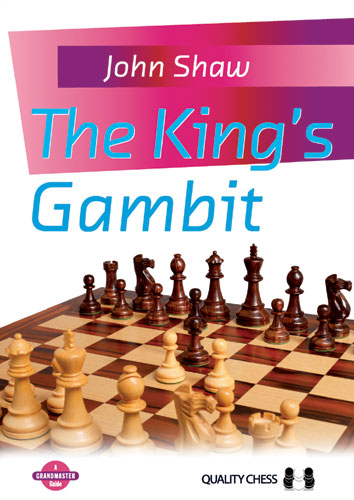

«The King's Gambit», de John Shaw (tapa blanda)

Add a gift box, an engraving — or both — to make it truly special.

Buy It With
€9,00
€10,00

Buy It With
€18,00
The King's Gambit by John Shaw is an English-language softcover chess book that takes a serious look at one of the boldest openings in chess. It shows why the King's Gambit is more than a romantic relic of earlier eras and why it can still be a dangerous weapon in modern play.
What this book covers
For a long time, the King's Gambit was a favourite choice for attacking players. In the days of Paul Morphy, it was seen as a natural opening for anyone who wanted to play with courage and without compromise. Its popularity later faded as many players became wary of such an ambitious plan with White.
John Shaw argues that this classic opening still has practical value. He draws on both the historical tradition and games by modern grandmasters such as Spassky, Bronstein, Short, Nakamura and Zvjaginsev, showing how the King's Gambit has been used successfully at the highest level. The result is a book that connects opening history with a modern, computer-era view of the theory.
Why choose it?
This is a substantial repertoire and theory work for players who want a deeper understanding of aggressive opening play. Its length makes it useful both for structured study and for revisiting specific lines before a tournament or training session. If you are building an opening library and want a serious book on active play with White, this title is a strong addition.
GM John Shaw is a three-time Scottish champion, and this is his most ambitious book, developed over many years.
Edition details
- Author: GM John Shaw
- Language: English
- Binding: softcover
- Pages: 680
- Publication date: 19 July 2013
- ISBN: 978-1-906552-71-8
Review
“The book is a monster. A monster that will kill you if you are not careful! You know if you tame it, it will eat out of your hand... The Kings Gambit is a masterpiece despite the points raised and deserves to be.”
Martin Rieger (full review in German)


Tangible precision
Each move strengthens curiosity, concentration, and self-confidence.