


Make your chessboard a special gift
Add a personal engraving or gift wrapping with one click. You can remove these extras anytime in the cart.


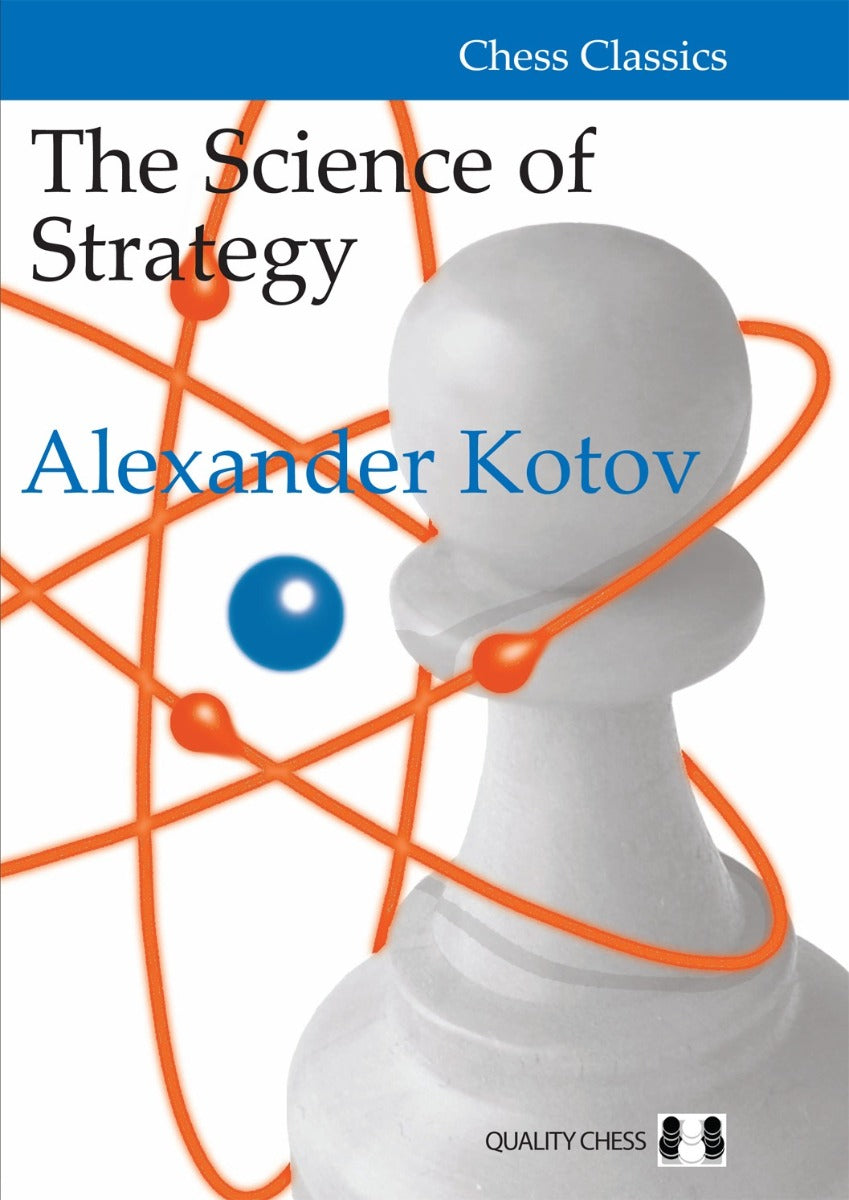

The Science of Strategy by Alexander Kotov (Paperback)
Add a gift box, an engraving — or both — to make it truly special.

Buy It With
€9,00
€10,00

Buy It With
€18,00
The Science of Strategy by Alexander Kotov is an English-language paperback chess book that takes a methodical look at strategy, helping readers understand positional play, evaluate a position and turn that evaluation into a practical plan. This edition includes chess diagrams and focuses on the ideas behind the moves, not just the moves themselves.
What this book covers
Kotov approaches strategy in a structured way. He begins with the role of pawns and then moves through the key elements of positional play, building a fuller picture of strategic thinking at the board. The book closes with one of the hardest practical questions in chess: how to assess a position and use that assessment to choose the right plan.
That makes it especially useful for players who know that an engine can point to a move, but does not always explain why that move fits the position. The book connects structure and plan in a way that is relevant for chess study, training, self-analysis and tournament preparation.
How Kotov explains strategy
One of the strengths of the book is its clear, direct style. Kotov explains the ideas mainly in words rather than overwhelming the reader with variations, so the focus stays on understanding the position. The discussion is supported by carefully annotated positional games, with names such as Alekhine, Botvinnik and Karpov appearing throughout.
The Science of Strategy is a solid choice for ambitious club players and for anyone who wants to organise their strategic knowledge and read classic master games with more confidence.
About the author
Alexander Kotov is the author of Think Like a Grandmaster.
Key details
- Product type: paperback chess book
- Author: Alexander Kotov
- Subject: chess strategy and positional play
- Language: English
- Content: chess diagrams
- Page count: 240 pages
- Publication date: 3 April 2019
- ISBNs: 978-1-78483-079-3; 978-1-78483-080-9


Tangible precision
Each move strengthens curiosity, concentration, and self-confidence.